
01
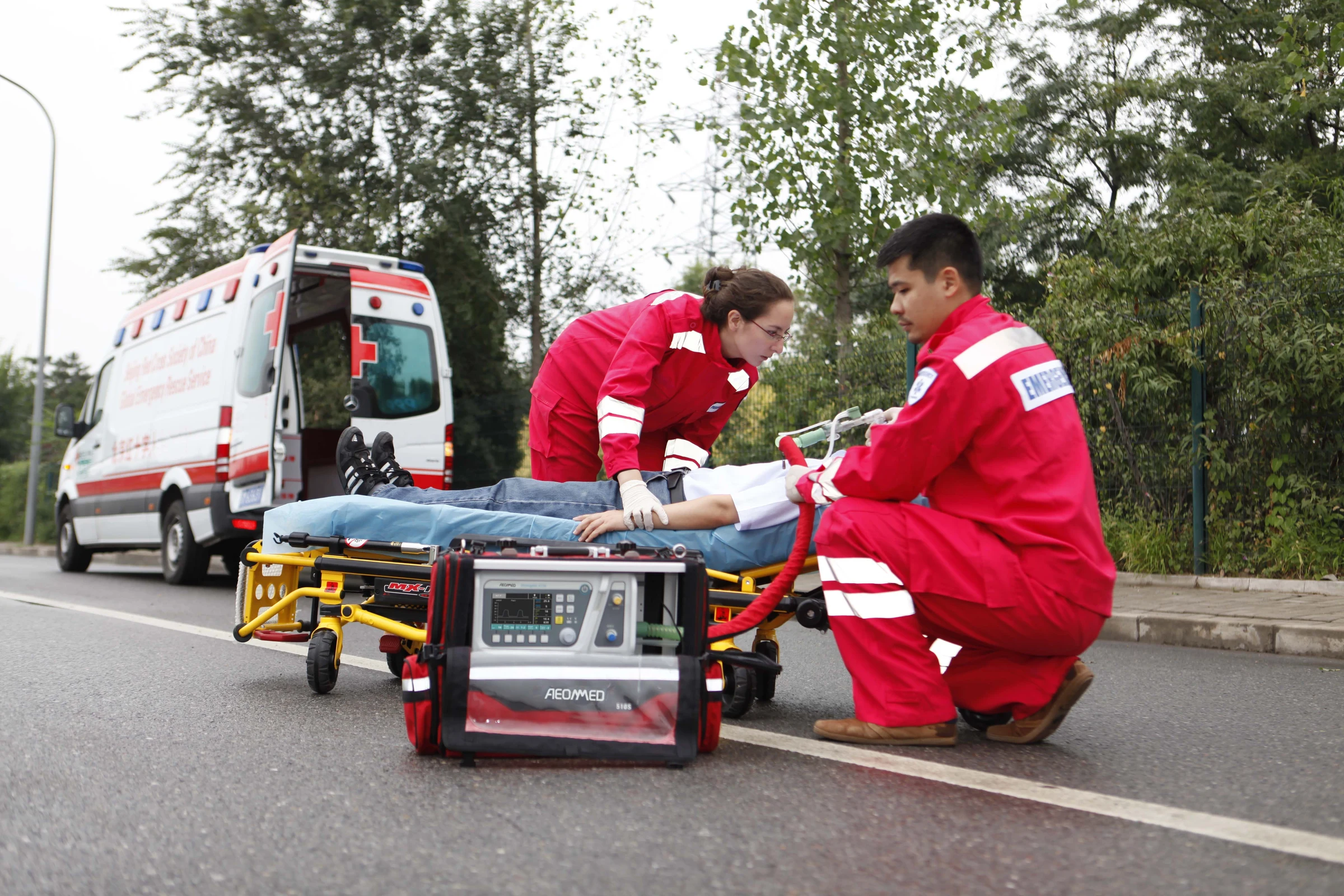
On-site emergency response
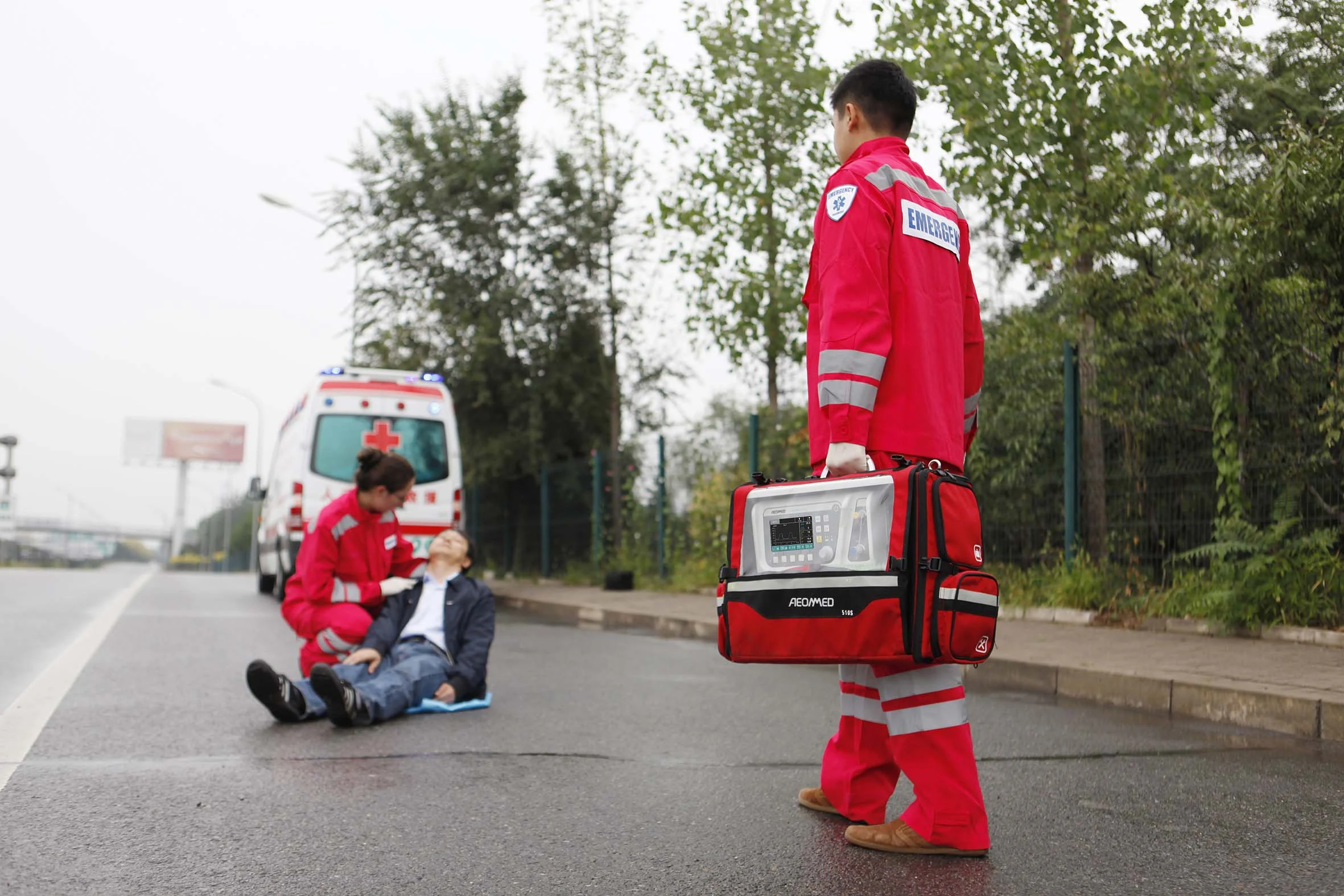
A portable configuration for trained teams working before hospital arrival.
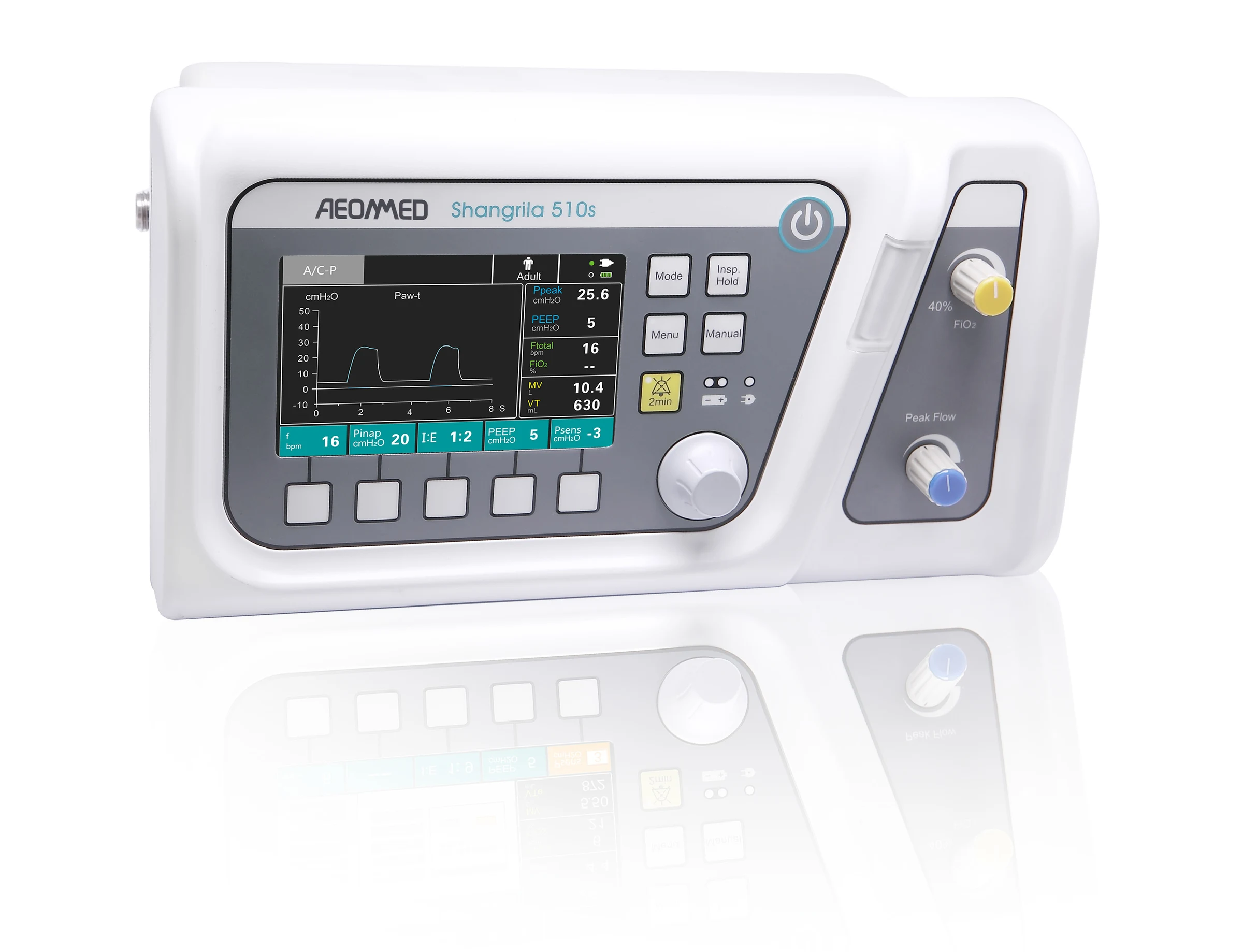
Portable emergency & transport ventilator
A compact, pneumatically driven and electronically controlled ventilation platform documented for emergency response, pre-hospital, inter-hospital and intra-hospital transport.
Exact-model video · 720p
This external video is published for Heyer medical and identifies the Shangrila 510S model. It requests 720p playback; YouTube may adapt quality to the connection. Options shown may differ from the configuration available for your market.
Request a technical presentationCurrent technical sourceDatasheet V202509
Product photography12 original high-resolution images
Stock accuracyQuantity reconfirmed before commitment
From scene to destination
A portable configuration for trained teams working before hospital arrival.

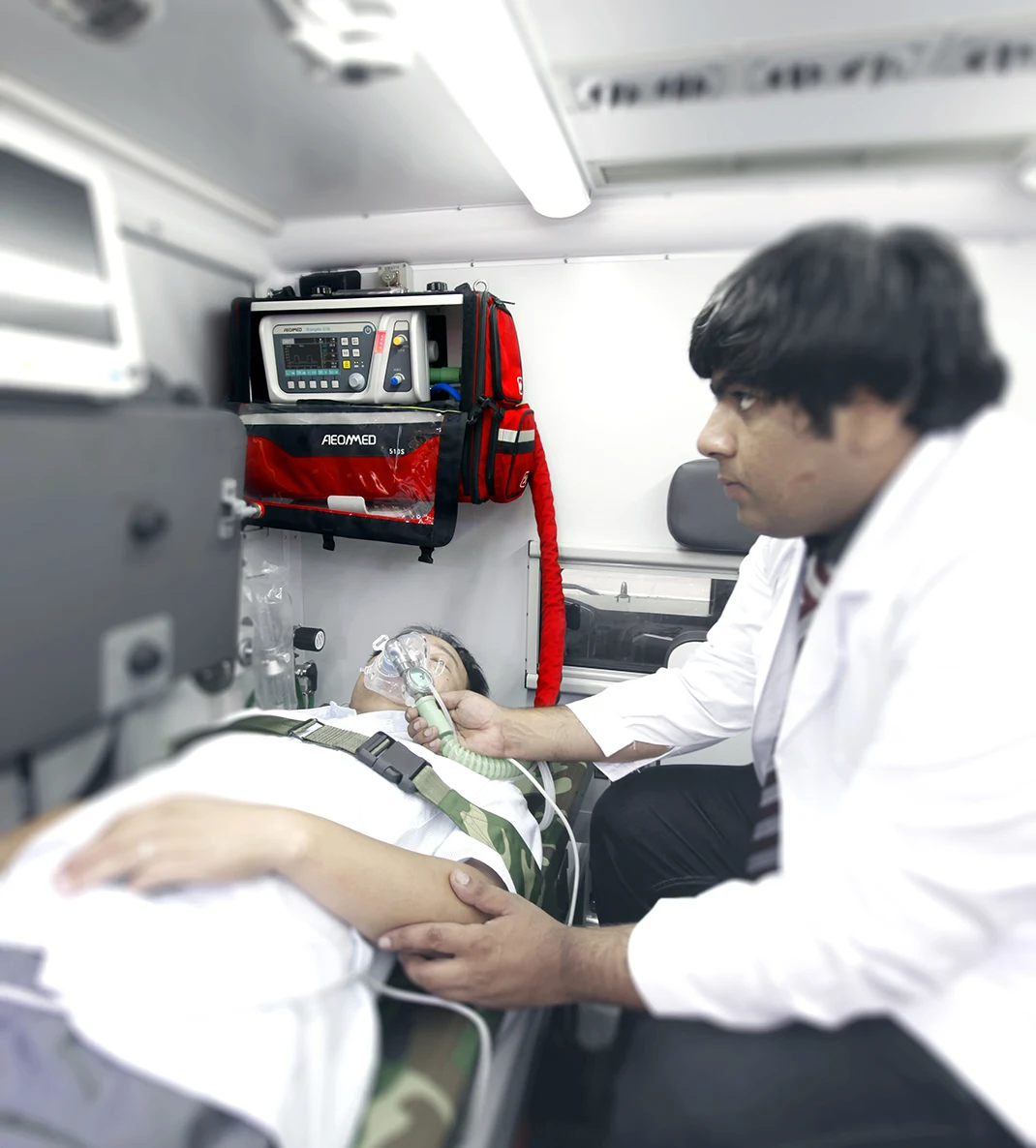
Real product photography shows the workstation secured beside the patient transfer route.
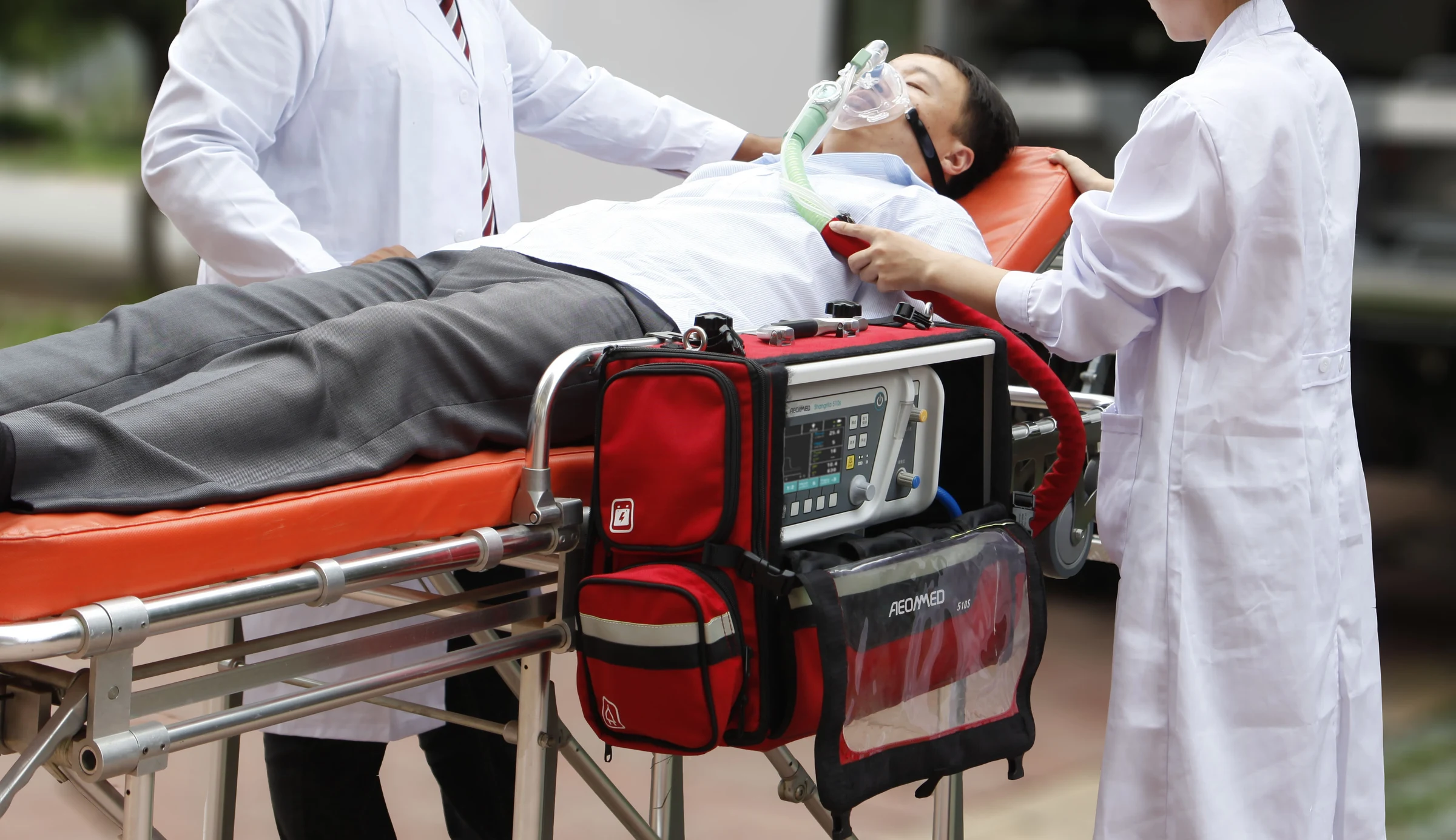
Evaluate the exact circuit, mounting, power and oxygen configuration for the planned route.
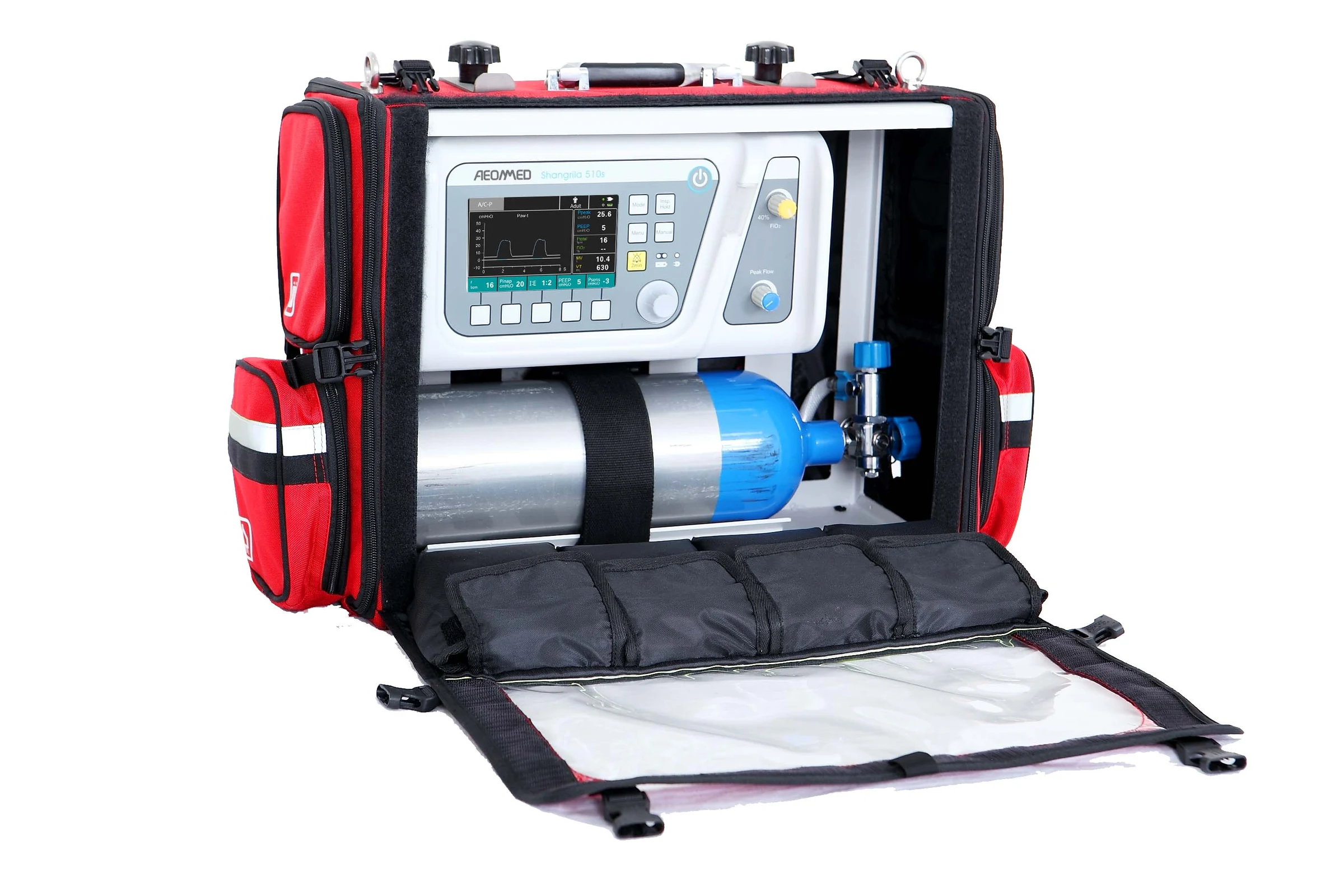
Integrated respiratory workstation
The 510S can be configured in a transport bag with organised cylinder and accessory space. The image is illustrative of a workstation configuration; every included component and part number must be stated in the quotation.
Ventilation platform
The values below follow the V202509 datasheet. Optional functions and configuration can vary by market, so the quotation and regulatory documents must be matched to the destination.
Volume- and pressure-control modes, invasive and non-invasive ventilation, plus manual breath.
Documented 40–100% oxygen concentration with pressure and flow triggering.
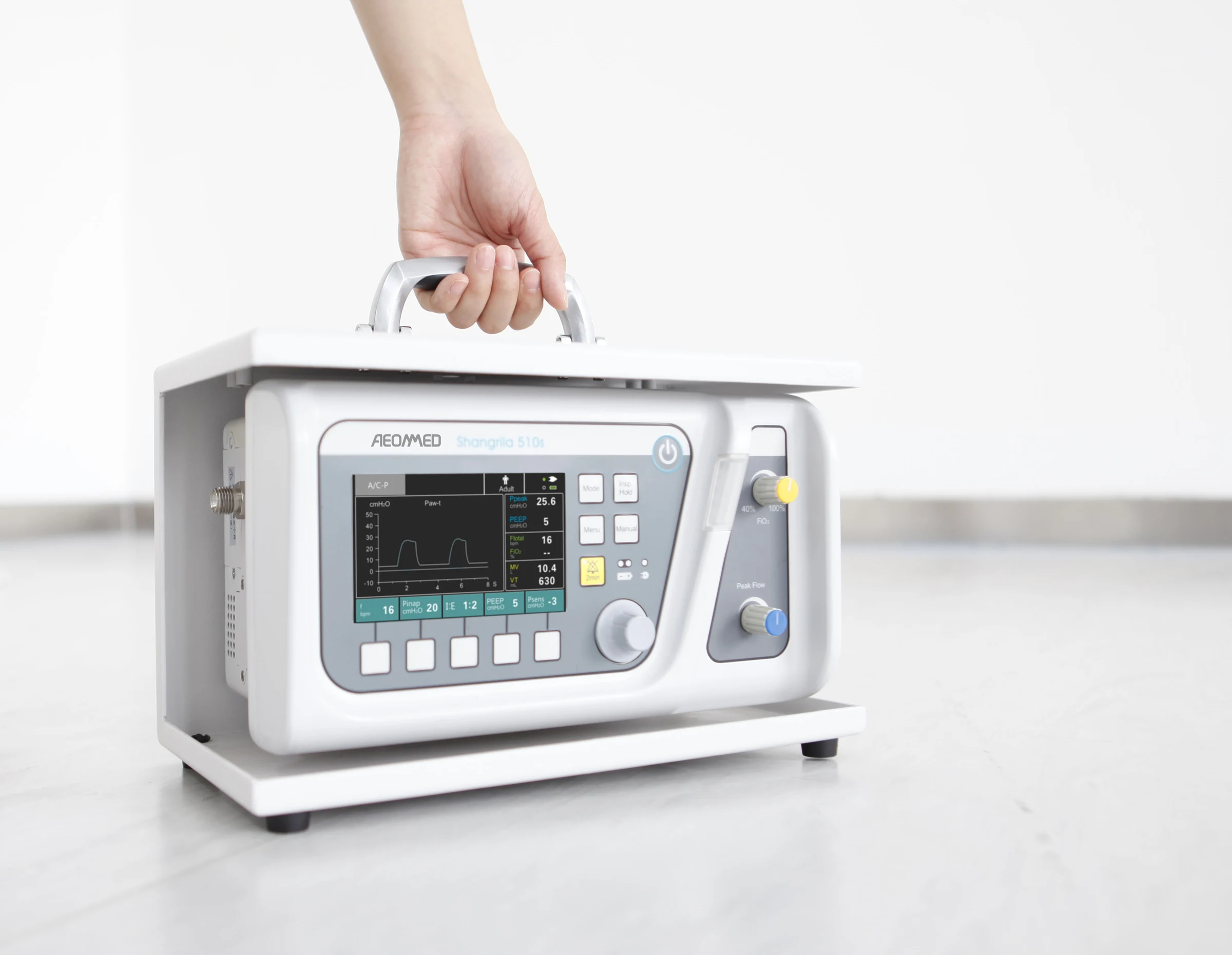
Pressure, volume, flow and frequency values with pressure-time and flow-time waveforms.
Documented audible and visual alarms for pressure, volume, oxygen, apnea, power and battery conditions.
Current specifications
Real product gallery
Technical library
Two-page commercial overview, applications, modes, alarms and technical data.
Open PDFD02V202509Current parameter ranges, patient types, power, environment and physical specifications.
Open PDFD032022Application scenarios, power concept, interface and configuration overview.
Open PDFD04V202208A separate workstation presentation. The exact supplied package remains quotation-specific.
Open PDF510S 360° knowledge centre
Compare mission fit, configuration, power and oxygen requirements, then prepare your documentation, training, service and delivery questions.
High-priority direct answers
Start with your transport mission and vehicle configuration, then review documents, service and quotation scope.
The primary buyers are institutions rather than individual patients: ambulance operators, ambulance manufacturers and converters, medical-device distributors, hospital emergency and transport departments, industrial or event medical providers, and government EMS organisations. Each buyer should confirm the intended missions, patient groups, vehicle or hospital integration, required documents, service model and destination-market requirements before purchase.
Context and sourceA robust purchase normally includes four viewpoints: the operational user such as an EMS Director, Chief Paramedic or Ambulance Operations Manager; the technical evaluator such as a Biomedical Engineer; the procurement lead who manages quotation and tender steps; and the final budget or clinical approver. Small private operators may combine these roles, while hospitals and public buyers usually require operational, technical and procurement approval.
Context and sourceRequest a line-by-line quotation that identifies the 510S main unit, protective or transport arrangement, vehicle mounting solution, compatible DC vehicle power cable, oxygen connection components, adult and paediatric circuits where applicable, battery scope, training, acceptance and calibration documents, warranty, service contacts and delivery basis. These items are an RFQ checklist, not a statement that every item is standard or included; part numbers, compatibility, quantity and price must be confirmed in the final quotation.
Context and sourceProvide the organisation and country, buyer type, intended transport missions, vehicle or care setting, current ventilator model and service age if this is a replacement, patient groups, target quantity and date, mounting, power and oxygen arrangements, required circuits and accessories, tender specification, conformity or registration checklist, training, warranty and service expectations. Do not send patient-identifying information.
Context and sourceYes. The manufacturer describes Shangrila 510S as an emergency and transport ventilator, and the supplied documents show ambulance and pre-hospital use. An ambulance evaluation should still verify mounting, power and charging, oxygen supply, battery mission time, circuits, storage, cleaning, vehicle compatibility, crew training and an approved backup-ventilation procedure.
Context and sourceNo public equipment price is published. Shangrila 510S is quoted by configuration, quantity, destination, accessories, documentation, delivery, training, warranty and service scope. Send the required use case and complete kit so the regional team can prepare a comparable quotation instead of a misleading base-unit price.
Context and sourceThe regional site identifies Shangrila 510S as Dubai Stock, but the owner has not supplied a public numeric quantity. The sales team must confirm current physical quantity, configuration, allocation and inspection status before quotation or commitment. “Dubai Stock” must not be converted into an assumed unit count or guaranteed immediate dispatch.
Context and sourceNo. The public documents reviewed here support emergency and transport use, but they are not sufficient to claim approval for a specific aircraft or air-ambulance mission. An operator must separately verify aviation and operator requirements, mounting, electromagnetic and environmental limits, cabin altitude effects, oxygen and power integration, battery and dangerous-goods rules, loading, crew procedures and exact-model evidence before considering airborne use.
Context and sourceShangrila 510S; portable emergency ventilator; emergency transport ventilator; ambulance ventilator; pre-hospital ventilator; inter-hospital transport ventilator; ambulance ventilator procurement UAE; ambulance converter ventilator package; EMS ventilator tender Middle East; transport ventilator distributor GCC.
Regional enquiries are accepted for the UAE, GCC and nearby Middle East markets. Supply is evaluated for each destination and remains subject to the quoted configuration, local registration, applicable law, export controls and sanctions compliance.
Institutional buying routes
These routes are for ambulance operators, vehicle converters, distributors, hospitals, field-medical providers and public procurement—not individual patient advice.
Fleet expansion, advanced-life-support vehicle upgrades and replacement of ageing transport ventilators.
Vehicle integration, mounting, DC power, oxygen connections and a repeatable equipment bill of materials.
Regional projects, tenders and resale requiring product, evidence, training and service coordination.
Intra-hospital or inter-hospital transfer, emergency backup and biomedical acceptance workflows.
On-site medical coverage for energy, construction, industrial, sporting and large-event operations.
Fleet programmes and tenders requiring supplier registration, exact-model evidence and formal evaluation.
Buying committee
Include country, quantity, mission, target date and required configuration.
Go directly to the questions that affect your decision.
Start here to decide whether Shangrila 510S belongs in the transport pathway being planned.
For: Emergency clinicians, ambulance services, ICU teams, procurement and project plannersShangrila 510S is a pneumatically driven, electronically controlled portable emergency and transport ventilator. Current 2025 product documents describe use for on-site emergency treatment, pre-hospital transport, inter-hospital transport and intra-hospital transport. It is professional medical equipment and must be selected, configured and operated by qualified teams under local clinical and regulatory requirements.
#The current datasheet lists on-site emergency treatment and pre-hospital, inter-hospital and intra-hospital transport. The 2025 brochure also lists emergency, transport, intra-hospital transfer and recovery applications. A hospital or ambulance service should map the exact mission, patient pathway, crew, backup plan and required accessories before deciding that the model fits its workflow.
#The V202509 datasheet lists adult, child and infant patients above 3.5 kg. The supplied operating-instruction record states that the 510S is not intended for newborn patients. These labels do not select a patient or settings; qualified clinical staff must confirm suitability, circuit, interface, mode and backup arrangements for the delivered configuration.
#Yes. The manufacturer describes Shangrila 510S as an emergency and transport ventilator, and the supplied documents show ambulance and pre-hospital use. An ambulance evaluation should still verify mounting, power and charging, oxygen supply, battery mission time, circuits, storage, cleaning, vehicle compatibility, crew training and an approved backup-ventilation procedure.
#No automatic substitution should be assumed. Shangrila 510S is documented as an emergency and transport ventilator with defined modes, monitoring and alarms. A full ICU workflow may require different patient ranges, advanced functions, integration, monitoring, humidification and prolonged-use support. The clinical and biomedical teams must compare the exact requirement with current model documentation.
#Identify the buying organisation, the people who must approve the project and the complete scope that should be quoted.
For: Ambulance operators, vehicle converters, distributors, hospitals, industrial medical providers and government EMSGroup your vehicles by mounting, available power and oxygen connections, then list the quantity and accessory needs for each group. Send us that matrix with the destination and required delivery window. We can use it to define the configuration to quote; a single model name does not confirm that the mounting kit or connections fit every vehicle. Your biomedical and vehicle-integration teams should approve the proposed configuration before an order.
#Agree the exact configuration, included and separately quoted accessories, documents required for your destination, acceptance criteria, training scope, warranty and service responsibilities. Ask for the delivery and commercial conditions in the quotation. If your organisation requires a sample or demonstration, confirm its scope and availability with us rather than assuming it is included. Keep these decisions in the same RFQ so procurement, biomedical and operational teams review one package.
#The primary buyers are institutions rather than individual patients: ambulance operators, ambulance manufacturers and converters, medical-device distributors, hospital emergency and transport departments, industrial or event medical providers, and government EMS organisations. Each buyer should confirm the intended missions, patient groups, vehicle or hospital integration, required documents, service model and destination-market requirements before purchase.
#A robust purchase normally includes four viewpoints: the operational user such as an EMS Director, Chief Paramedic or Ambulance Operations Manager; the technical evaluator such as a Biomedical Engineer; the procurement lead who manages quotation and tender steps; and the final budget or clinical approver. Small private operators may combine these roles, while hospitals and public buyers usually require operational, technical and procurement approval.
#Request a line-by-line quotation that identifies the 510S main unit, protective or transport arrangement, vehicle mounting solution, compatible DC vehicle power cable, oxygen connection components, adult and paediatric circuits where applicable, battery scope, training, acceptance and calibration documents, warranty, service contacts and delivery basis. These items are an RFQ checklist, not a statement that every item is standard or included; part numbers, compatibility, quantity and price must be confirmed in the final quotation.
#An assessment is reasonable when a fleet adds vehicles, upgrades to advanced-life-support capability, has ageing equipment, experiences battery degradation or unavailable spares, cannot obtain required accessories or service, or needs documented modes and monitoring not supported by the current unit. Age alone does not decide replacement: record current model, years in service, failures, battery performance, support status, clinical requirement and total lifecycle cost before comparing options.
#Evaluate the complete integration and commercial route: mounting and crash-safety evidence, DC power and charging, oxygen interfaces, storage and cleaning, standard and optional items, repeatable bill of materials, tender documents, training, warranty, spares, service responsibility, project pricing and destination registration. Any distributor territory, project protection or exclusivity must be stated in a separate written agreement; it should not be inferred from a website enquiry.
#Provide the organisation and country, buyer type, intended transport missions, vehicle or care setting, current ventilator model and service age if this is a replacement, patient groups, target quantity and date, mounting, power and oxygen arrangements, required circuits and accessories, tender specification, conformity or registration checklist, training, warranty and service expectations. Do not send patient-identifying information.
#Use the contracting authority’s official supplier registration and tender channel, then submit only evidence that matches the exact model, configuration, legal manufacturer, authorised seller and destination requirements. Build a compliance matrix against the tender clause by clause, identify deviations, include delivery, training, warranty and service responsibilities, and keep catalogue claims separate from current certificates and local registration evidence. This website does not itself prove tender eligibility or supplier registration.
#No. The public documents reviewed here support emergency and transport use, but they are not sufficient to claim approval for a specific aircraft or air-ambulance mission. An operator must separately verify aviation and operator requirements, mounting, electromagnetic and environmental limits, cabin altitude effects, oxygen and power integration, battery and dangerous-goods rules, loading, crew procedures and exact-model evidence before considering airborne use.
#Use the exact 2025 data to compare capability, without turning public content into patient-specific settings.
For: Clinicians, clinical applications teams, biomedical engineers and tender evaluatorsThe V202509 datasheet lists A/C-V with Sigh, A/C-P, SIMV-V, SIMV-P, SPONT/PSV, CPAP and MANUAL. It also lists apnea backup ventilation, manual breath and alarm silence. Public mode names explain capability only; they do not provide a patient setting or replace the current operating instructions and local clinical protocol.
#Yes. The 2025 brochure describes invasive and non-invasive ventilation and lists SPONT/PSV and CPAP among the modes. This does not mean every interface, circuit or patient is suitable. The clinical team must confirm the intended use, compatible interface, leak strategy, monitoring, alarm policy and delivered configuration before use.
#The V202509 datasheet publishes tidal volume 0-2000 mL, inspiratory pressure 5-50 cmH2O, pressure support 0-50 cmH2O, CPAP and PEEP 0-30 cmH2O, pressure trigger -20 to 0 cmH2O, flow trigger 2-30 L/min, oxygen concentration 40-100%, and a maximum inspiratory flow of 90 L/min. These are catalogue ranges, not patient settings.
#The current datasheet lists minute volume, tidal volume, total frequency, peak pressure and PEEP, with FiO2 monitoring marked as optional. It lists pressure-time and flow-time waveforms on a 5-inch display. Tender and clinical review should confirm the exact sensors, optional functions, display language and configuration included in the quotation.
#No. The website can reproduce current public parameter ranges and explain the enquiry path, but it cannot diagnose, prescribe, select a mode or set tidal volume, pressure, oxygen, rate, trigger or alarm limits for an individual patient. Those decisions require qualified clinical staff using the delivered device, current instructions, monitoring and local protocol.
#Plan the whole transport mission rather than relying on the main unit’s weight or battery figure alone.
For: Ambulance fleet teams, biomedical engineers, emergency services and logistics plannersThe V202509 datasheet states a minimum 4.5-hour runtime for one battery, while the brochure describes approximately 4.5 hours. Mission planning should include battery age, charge state, temperature, accessories, transport duration, delays, charging opportunities and an approved backup. A catalogue runtime is not a guarantee for every field condition.
#The current datasheet lists AC 100-240 V at 50/60 Hz and a 12 V DC option. The owner-supplied 2025 configuration record identifies the vehicle DC cable as optional, so buyers should verify the plug, cable, vehicle outlet, charging behavior and included power items in the exact quotation.
#The V202509 datasheet lists an oxygen supply pressure of 250-600 kPa, and the brochure describes air entrainment through venturi technology with oxygen concentration adjustable from 40% to 100%. The service must verify cylinders or pipeline, regulators, connectors, expected consumption, reserve calculation and optional oxygen-monitoring hardware for its mission.
#The 2025 brochure lists a 3.2 kg main unit and 8 kg for the main unit with accessories. The current datasheet lists dimensions of 168 x 156 x 300 mm. Operational portability should still be assessed with the protective frame or bag, cylinder, circuits, power items, spare battery, mounting and the person or trolley carrying the complete kit.
#The 2025 brochure states EN1789 and IPX4, and the current datasheet lists operation from -18 to 50°C, relative humidity 15-95% and barometric pressure 70-110 kPa. These published claims should be checked against the exact delivered version, current certificate or test evidence, vehicle environment and local acceptance requirements.
#Separate the main unit, standard kit, optional items and workstation package before comparing offers.
For: Procurement, distributors, ambulance teams, biomedical engineers and service plannersUse the current regional configuration list and the final quotation, not a product photograph. The 2025 brochure marks some functions and accessories as optional. The owner-supplied configuration record identifies options including a 2.8 L oxygen-cylinder kit, oxygen sensor, vehicle DC cable, hanging plate and additional battery. Market packages may differ.
#A complete quotation should identify the exact regional version, main unit, software or language, standard accessories, breathing circuit, oxygen hose and connectors, power adaptor, battery, carrying or mounting solution, selected options, spare parts, consumables, documents, training, warranty, delivery basis and service responsibility. Every optional item should be priced or excluded explicitly.
#The portable package is organised for emergency and transport use. The 2022 integrated-workstation document shows the 510S mounted on a trolley with a humidifier, breathing circuit and support arm for a different bedside workflow. Because the workstation document is older, buyers should request the current bill of materials and confirm every included component.
#No generic compatibility should be assumed. Confirm the exact part number, circuit type, patient group, interface, connector, flow sensor, oxygen sensor, humidification arrangement and reuse or sterility status against current manufacturer documentation and the delivered configuration. Unverified accessories can affect ventilation, monitoring, alarms, resistance, leaks and infection control.
#Plan approved breathing circuits and patient interfaces, filters, hoses and connectors, sensors where fitted, batteries and charging items, mounting parts, carrying components, seals and service spares identified by the manufacturer. Quantities depend on installed base, mission frequency, cleaning policy, replacement rules, shelf life and local service capability; request an exact model-level list.
#Answer alarm questions without bypassing safety systems or giving patient-specific settings.
For: Clinical users, ambulance crews, biomedical engineers and authorised service personnelThe 2025 documents list high and low airway pressure, high and low minute volume, high and low FiO2 when the optional function is fitted, no tidal volume, continuous-pressure high, oxygen deficiency, apnea, external-power loss and low battery. The delivered device instructions and training define exact priorities, messages, limits and response steps.
#Protect the patient first. Follow the trained clinical assessment and approved backup-ventilation plan, then identify the alarm and check the patient, circuit, gas and power as the current instructions permit. Do not repeatedly silence the alarm, change prescribed settings or continue transport on an unexplained fault without qualified clinical and technical judgement.
#Record the exact alarm text, mode and non-patient-identifying context, then check the patient, circuit connection, kinks or obstruction, leaks, interface, filters, valves, sensors and recent changes according to training. If ventilation is ineffective or the cause is not rapidly understood, use the approved backup plan and escalate; do not guess new settings online.
#Confirm patient safety and the backup plan, then check source pressure, cylinder or pipeline, regulator, hose, connector, mains or vehicle power, adaptor, battery state and recent disconnection as trained. Change to an approved source or backup only under the operating instructions. A persistent alarm requires removal from service and authorised technical assessment.
#Send the exact model, serial number, delivered configuration, alarm text or code, date and time, operating phase, connected accessories, power and gas source, recent maintenance or changes, and non-sensitive photos or logs. Do not include patient-identifying data, passwords or unapproved internal repairs. State whether the device has been removed from clinical use.
#Build the support system around the device before it enters routine transport service.
For: Infection control, clinical education, biomedical engineering, service and operationsYes. The 2025 brochure lists a pre-use test, and the 2022 introduction describes automatic pre-use testing. The delivered operating instructions and training must define the actual sequence, required circuit and gas setup, acceptable result, daily frequency and action after a failed test. A passed self-test does not replace visual inspection or mission checks.
#Use the current instructions and facility infection-control policy for the exact main unit, bag or frame, circuit, sensors, hoses and reusable accessories. Confirm approved agents, contact time, liquid restrictions, disassembly limits, drying, storage and single-use items. IPX4 is not permission to immerse, spray freely or use an unapproved disinfectant.
#Use the delivered service requirements to schedule inspections, functional and alarm tests, battery checks, gas-path and connector checks, sensor verification where fitted, electrical-safety testing and replacement of defined parts. Frequency depends on manufacturer instructions, use intensity, environment and local policy. Only authorised trained personnel should open protected assemblies or perform controlled service procedures.
#User training should cover intended use, setup, pre-use checks, circuits, gas and power, controls, alarms, transport transitions, backup ventilation, cleaning and post-use checks. Technical handover should cover configuration records, acceptance tests, battery and accessory control, preventive maintenance, fault reporting, restricted documents and service escalation. Competency should be assessed for each role.
#Complete configuration and quantity verification, visual and safety checks, power and gas tests, pre-use test, alarm and function checks, accessory and consumable verification, mounting assessment, user training, technical handover, document set, warranty and service contacts, asset registration and signed acceptance. Record any open deviation with an owner and due date.
#Turn product interest into a comparable, source-backed quotation without inventing price or lead time.
For: Hospital procurement, ambulance operators, distributors, finance and logisticsNo public equipment price is published. Shangrila 510S is quoted by configuration, quantity, destination, accessories, documentation, delivery, training, warranty and service scope. Send the required use case and complete kit so the regional team can prepare a comparable quotation instead of a misleading base-unit price.
#The regional site identifies Shangrila 510S as Dubai Stock, but the owner has not supplied a public numeric quantity. The sales team must confirm current physical quantity, configuration, allocation and inspection status before quotation or commitment. “Dubai Stock” must not be converted into an assumed unit count or guaranteed immediate dispatch.
#A pre-order enquiry is available, but it is not a promise of factory acceptance or a fixed lead time. Provide configuration, quantity, destination and target date. The regional team must confirm production or replenishment route, regulatory documents, commercial terms, shipping basis and expected schedule before the request becomes an order commitment.
#There is no universal public lead time. Delivery depends on confirmed allocation or production, configuration, inspection, export and destination documents, payment, transport mode, customs, site access, installation and training. Request a dated delivery estimate for the exact destination and quantity, with dependencies and the point at which the schedule becomes binding.
#Send country and destination, customer type, clinical setting, transport mission, patient groups, required quantity, target date, power and mounting needs, oxygen source, desired configuration and options, regulatory or tender documents, training, warranty and service expectations, plus company and contact details. Do not send patient-identifying information.
#Separate current model evidence from company history, catalogue marks and destination-market approval.
For: Compliance, tender committees, distributors, hospital leadership and auditorsThe supplied 510S documents identify Beijing Aeonmed Co., Ltd. as the manufacturer. Heyer Dubai presents the product through the regional catalogue and enquiry channel. Aeonmed’s official company information states that it acquired Heyer Medical AG in 2019. Buyers should still verify the current seller, invoice entity, authorisation, service responsibility and regulatory role for the destination.
#The supplied 2025 brochure explicitly states that Shangrila 510S meets EN1789 and has an IPX4 waterproof level. The website cites the brochure as the source. For a tender or regulatory file, request the current exact-model declaration, certificate or test evidence and confirm its edition, scope and applicability to the delivered configuration.
#No. A brochure mark or portfolio statement does not prove current registration, approval, importer status or market access in every destination. Request the exact-model certificate or declaration, label and instructions, manufacturer and authorised-party details, and the local registration evidence required by the UAE, Saudi Arabia or other destination before purchase.
#The supplied V1.0 202509 brochure displays a CE 0123 mark on its cover and states EN 1789 and IPX4. The public 510S files supplied for this website do not include a current signed EU Declaration of Conformity, the applicable CE certificate, an ISO 13485 certificate or a current signed regional dealer authorisation. Buyers who require these records must request controlled copies and match the legal manufacturer, model, scope, validity, authorised party and destination-market registration to the quoted configuration before purchase.
#Use the current V202509 technical datasheet and V1.0 202509 brochure for public specifications, then confirm the delivered configuration and operating instructions. The 2022 introduction and workstation documents provide application and package context but should not override newer figures. A final controlled manufacturer document and contract record take precedence over website copy.
#The page maps specifications to dated supplied documents, labels optional items, separates public stock status from unknown numeric quantity, keeps equipment price by quotation and marks destination-market evidence for confirmation. It does not convert private chat into public evidence, recommend patient settings or treat a company-level certificate as proof for the exact model.
#Product selection questions
Compare use, configuration and compliance documents, then review maintenance, training and purchasing requirements with your team.
Heyer Dubai · Middle East regional centre